

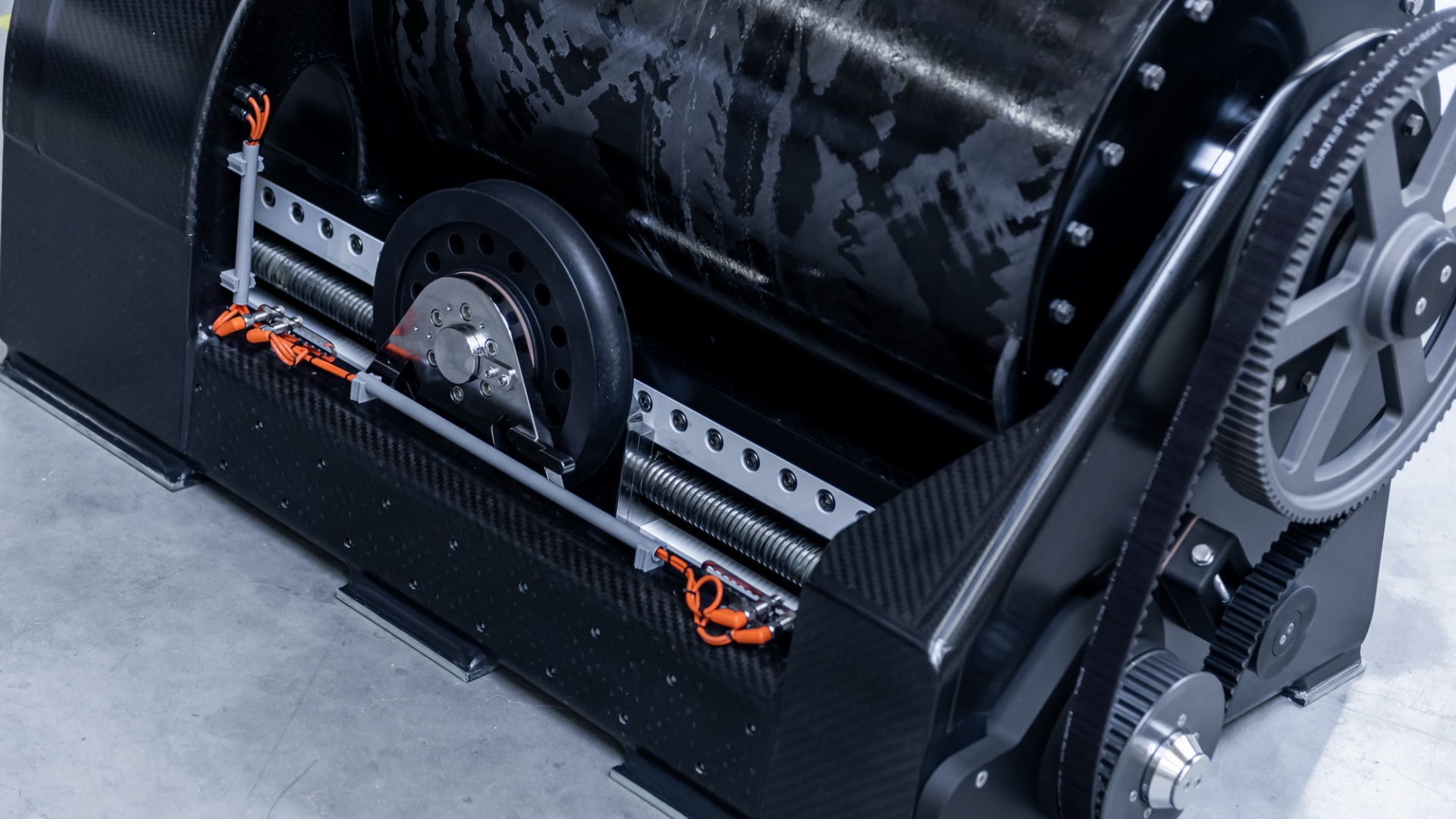
Rondal rarely finishes one winch innovation before the next is already underway. Such is the team’s appetite for continuous improvement and its willingness to take on ambitious projects.
From the winches on Juliet, designed to outperform anything available at the time, to the ultra-lightweight systems developed for Nilaya, each project builds on a long-standing culture of refinement. Together, they trace the evolution of some of the most advanced winch systems found on superyachts today.
Where it began
The story starts in the early 1990s with the 44-meter cruising ketch Juliet, the first yacht to be fitted with Rondal’s captive winch systems. At the time, most captive winches were bulky two-drum systems where rope spooled in multiple layers, often leading to tangles, overrides, and inconsistent operation under load.
Rondal’s founder, the late Wolter Huisman, challenged mechanical designer Jaap Onrust to rethink the system entirely. The goal was a single-drum, single-layer winch capable of maintaining constant line geometry and controlled spooling under load. But meeting the brief was no easy task. Perfecting the design of the feeders alone involved extensive testing of countless discs, profiles, and materials.
By spring 1993, however, the first systems entered service on Juliet. They delivered pulling capacities up to 8 tons and line speeds up to 57 meters per minute. The captain’s verdict? Smooth, efficient, and virtually maintenance-free.
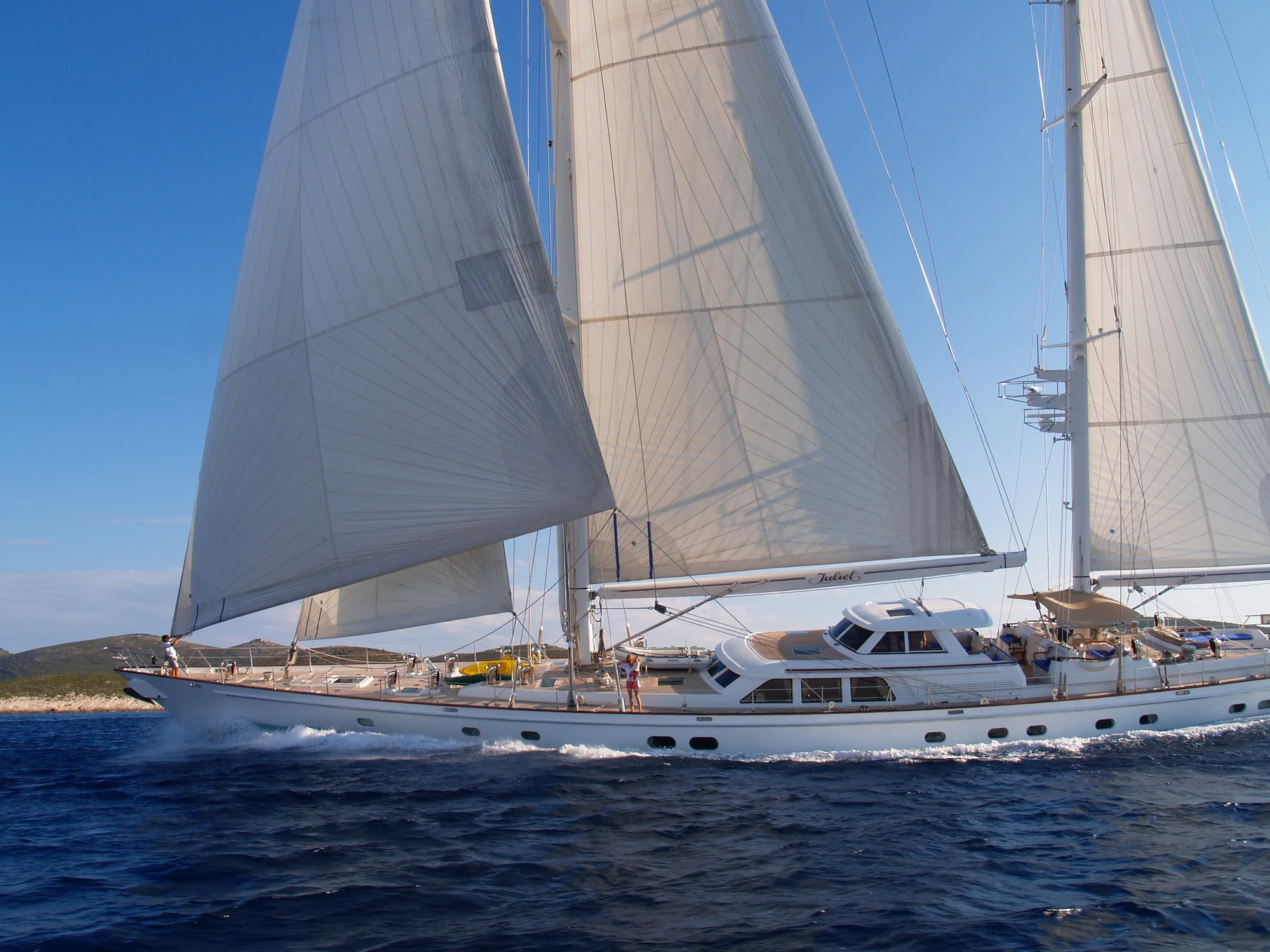
Rondal’s service team backs that up. Even after three decades of operation, many of these early winches often require little more than minor cosmetic care before returning to service.
That first system helped cement the company’s long-standing reputation for efficiency and reliability.
“With similar geometry and a comparable system configuration, those early models are, in principle, not very different from the winches we build for the most renowned superyachts today,” explains Rondal’s winch expert Ard Ritsema.
An Electric Edge
That continuity is evident in more recent projects such as Canova, the 43-meter carbon-composite superyacht delivered by Baltic Yachts in 2019. She was the first yacht to carry Rondal’s carbon electric captive winches — the culmination of years of development.
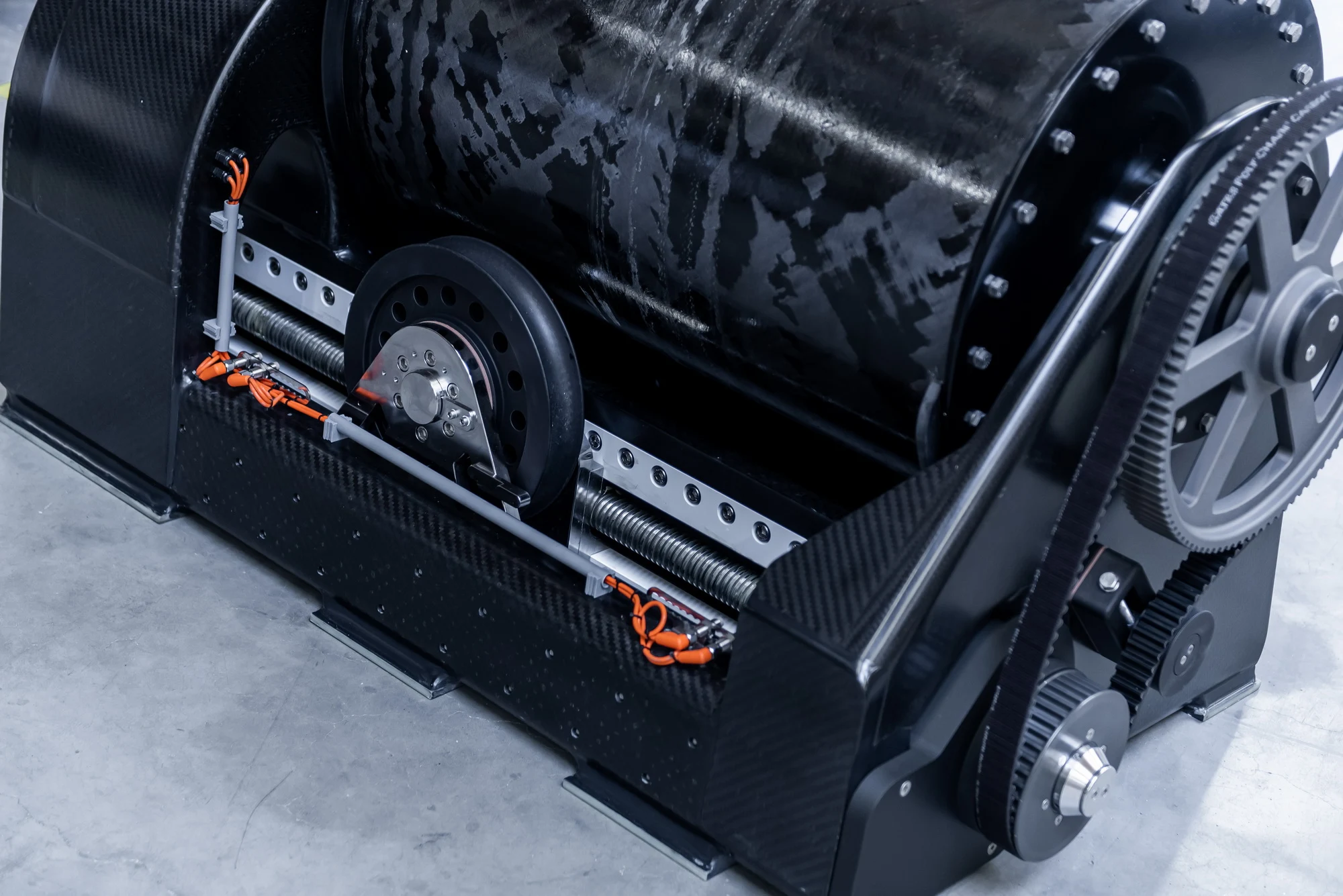
Work on carbon composite materials under sustained and cyclical loading began as early as 2004. Electric drive development followed in 2013, including testing of permanent magnet motors at regatta-level trim frequencies and in sustained full-load conditions to evaluate endurance.
On Canova, those strands came together. The result was a full set of electric feeders and winches designed to support a fast, lightweight yacht with reduced emissions. With capacities ranging from 8 to 18 tons, the system improved mechanical efficiency by 15%, while reducing weight by 20% compared to traditional versions. And with their line speeds of up to 80 meters per minute, they gave the crew everything needed to gain an edge on the racecourse.
Space-grade Testing
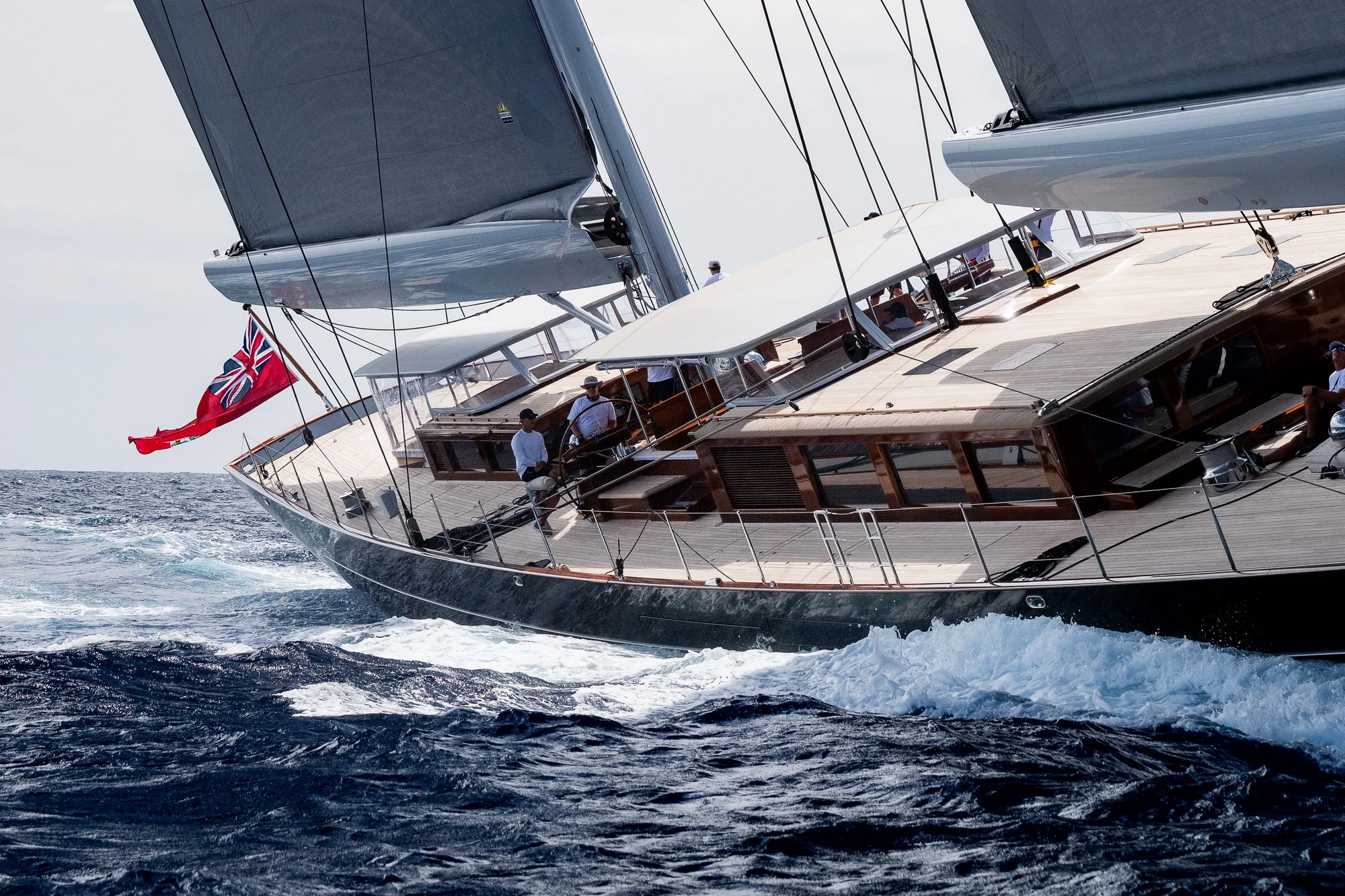
The 24-ton electric winches on Royal Huisman’s 60-meter sloop Sarissa, delivered in 2023, were developed to handle the loads generated by her downwind sail area of up to 3435 square meters. Until that year, the 18-ton versions had been the team’s highest capacity model.
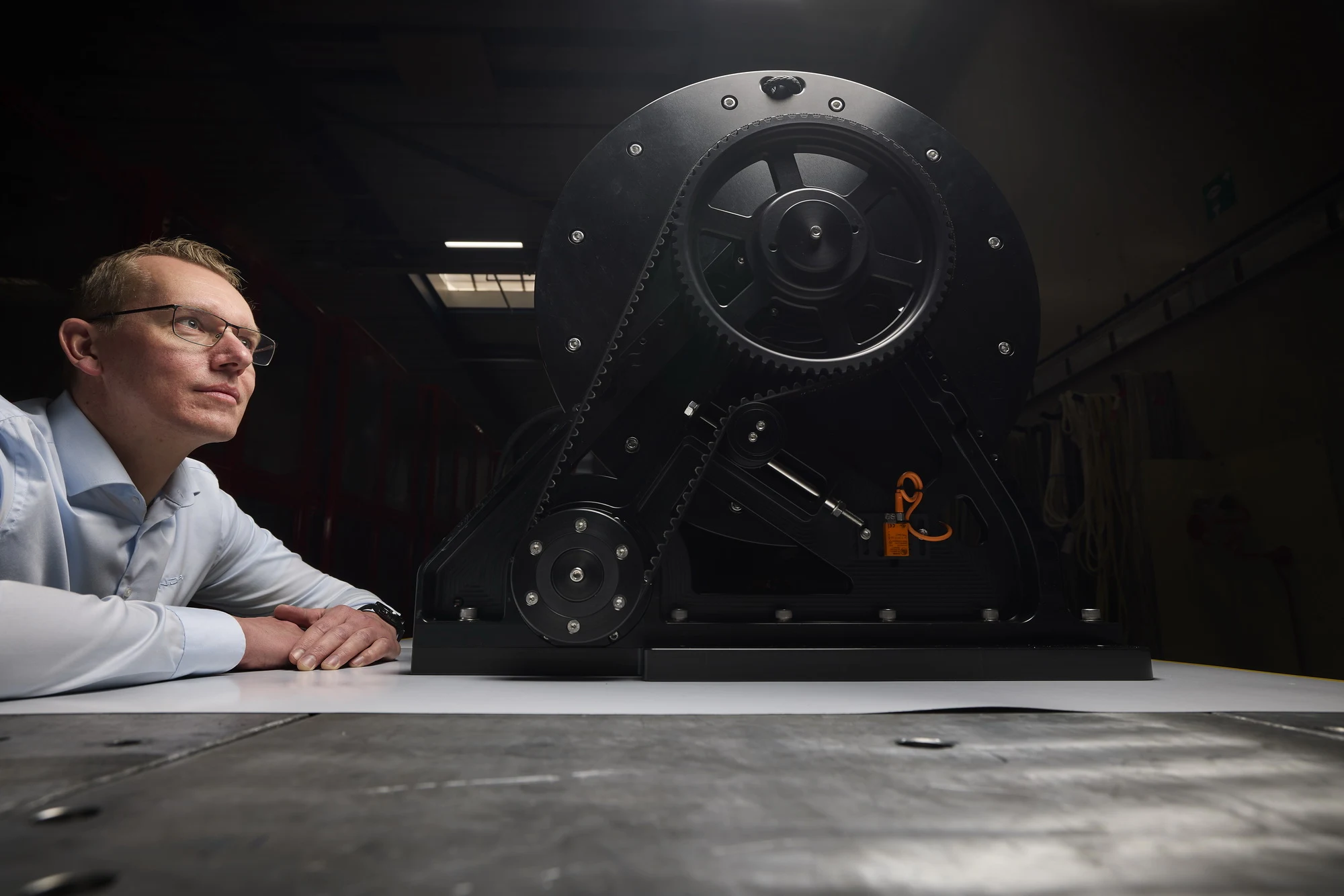
“We validated this step up in pulling power in collaboration with the Netherlands Aerospace Centre,” says Ard. Testing focused on the interaction between line and carbon surface, ensuring the winches performed precisely as intended under real-world conditions.
The system also introduced energy regeneration, capturing kinetic energy and feeding it back into the yacht’s battery bank. This not only improves overall energy efficiency but reduces peak load demand on onboard power systems. The approach contributed to Sarissa receiving an Eco Award, recognising the yacht’s broader sustainability efforts.
Less is More
That same year, Rondal approached a different challenge on Nilaya, one of the lightest aluminium sailing superyachts of her length. With racing performance in mind, reducing weight across all components became critical.
“We were asked to develop winches that were lighter than anything on the market, without compromising strength,” said Ard.
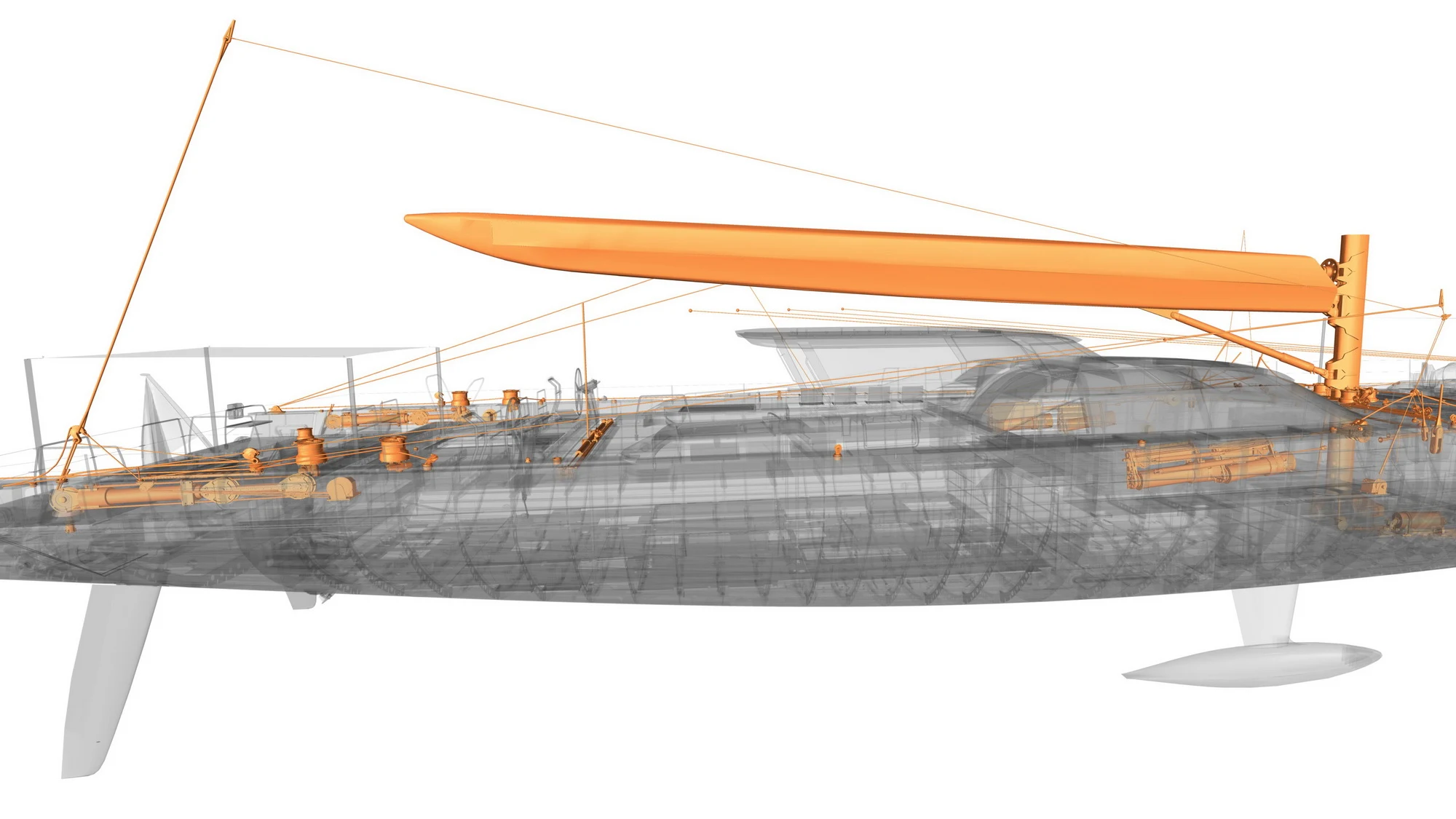
To meet this challenge, the team rethought the winch architecture. The new design combined a lightweight aluminium bracket and housing with a carbon drum and incorporated the yacht’s foundation plate as a structural element to achieve strength with significantly less material.
The result was an additional 25% weight saving on an 18-ton winch without any loss in strength or performance.
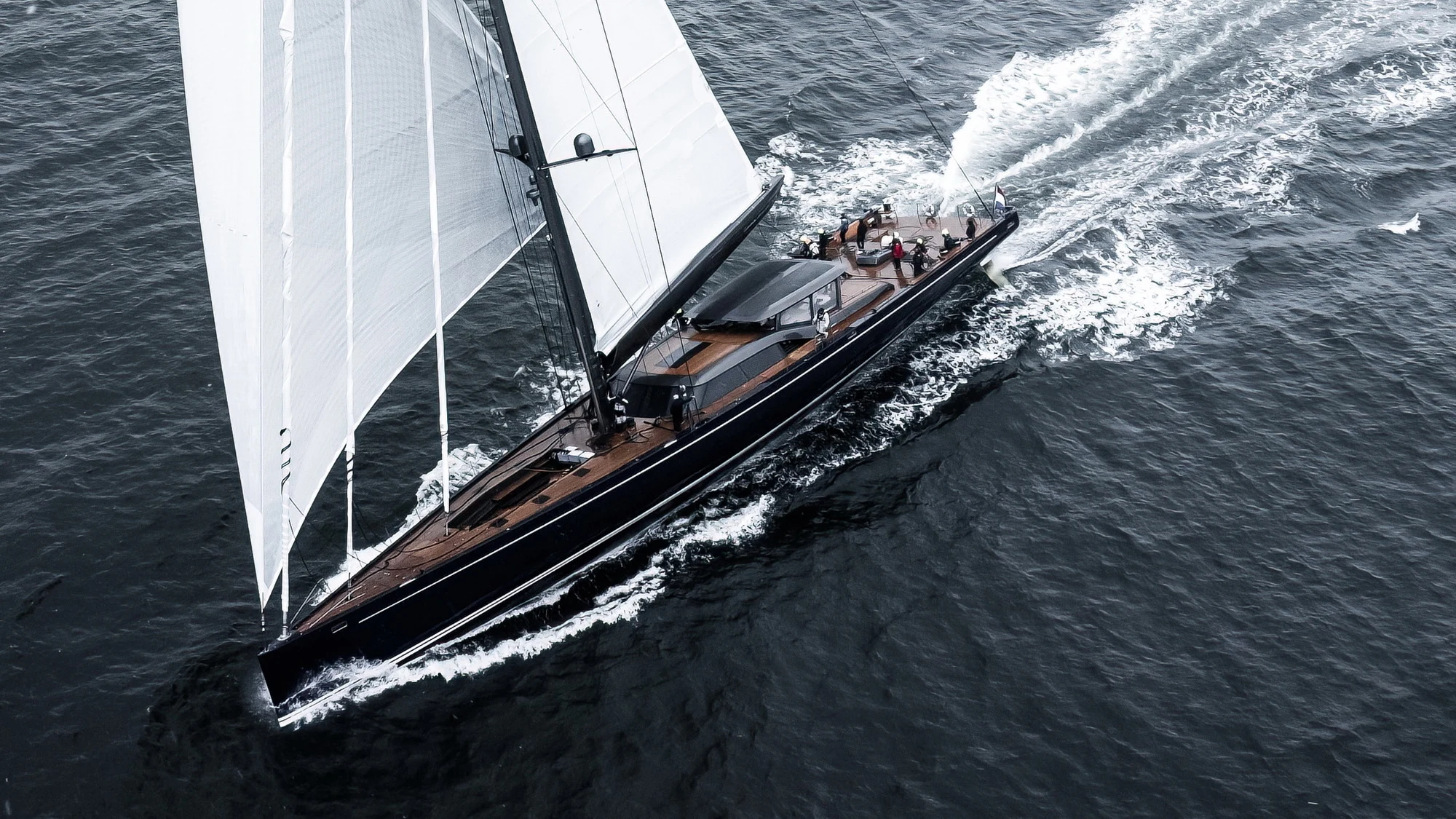
That same engineering approach extended to Nilaya’s hydraulic feeders. The team drew on lessons from Canova and Sarissa’s electric counterparts to ensure equal precision and controlled tension below deck.
Picking up the slack
Customer input continues to shape development at Rondal.
During METS 2021 in Amsterdam, the captain of a 100-meter Dutch-built motor yacht then under construction saw a captive winch on display and immediately recognised its potential for mooring applications.
Until then, captive mooring winches had long been used on commercial vessels but rarely applied to superyachts. Yet mooring remains one of the highest-risk onboard operations, involving large lines under extreme loads. Recognizing this, the International Maritime Organization (IMO) introduced new regulations, making hands-off mooring mandatory for vessels over 3,000 GT from 2024, and recommending it for those under that threshold.
A below-deck captive system that can be operated remotely makes the securing and trimming of lines faster, safer, and more controlled.
Rondal responded by developing its first captive mooring winch, installed on the aforementioned motor yacht in 2025, giving the crew push-button control of her 32 mm-diameter mooring lines.
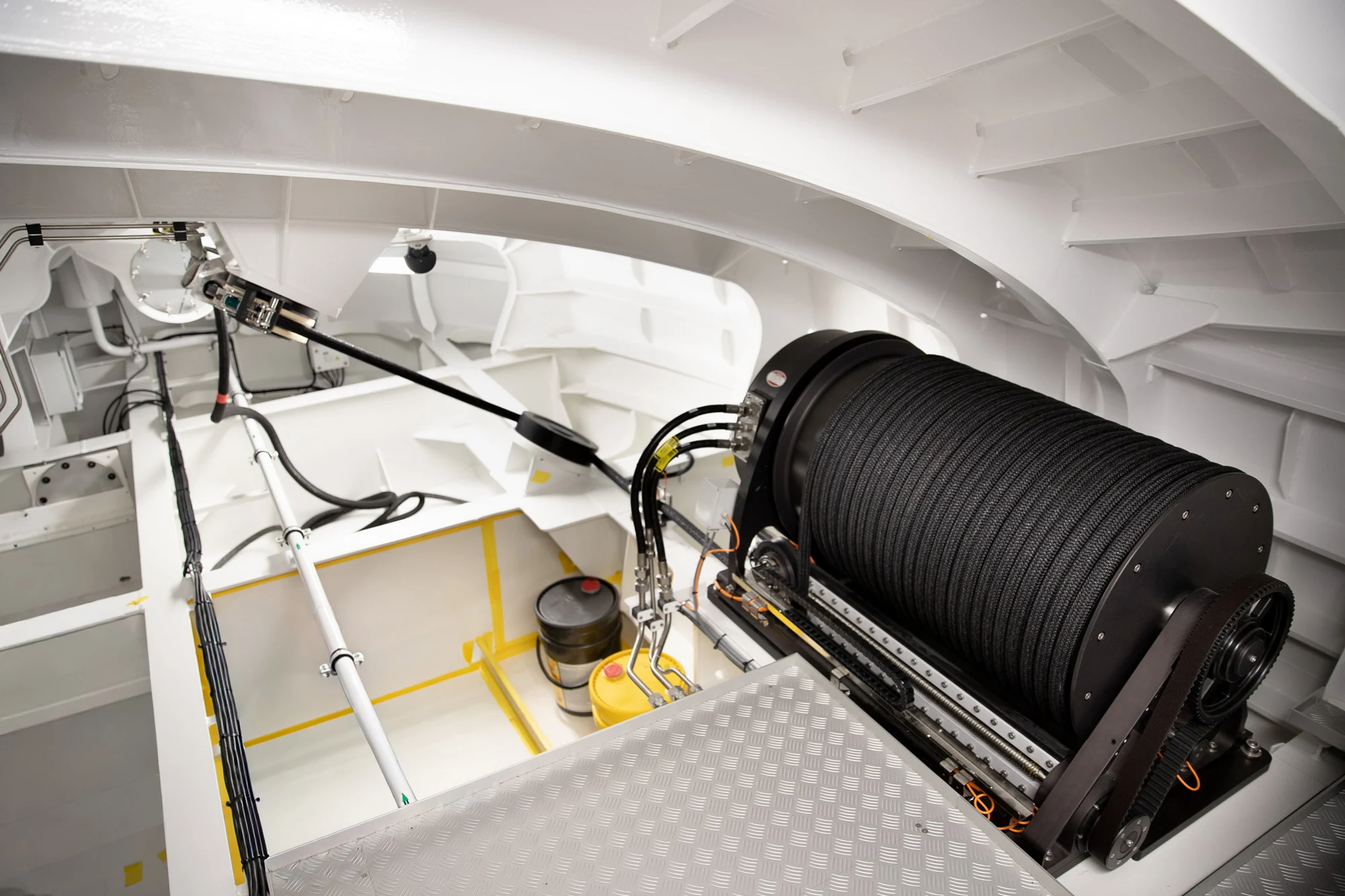
The yacht’s captain and owner’s representative have since called the system “a glimpse into the future of mooring.” And they’re not alone. One motor and one sailing yacht currently under construction will be the second and third to feature the winches. The latter will be fitted with no fewer than 14 units.
Further enquiries from the market suggest this is only the beginning, according to Sales Manager Boaz Dikken. He also notes that the company’s mooring winches and supporting video animation are now being echoed elsewhere in the market. “We take that as a positive sign,” he says.
Support from Start to Finish
For Rondal, the hardware for mooring and sail handling is only part of the solution. Installation and integration are just as crucial.
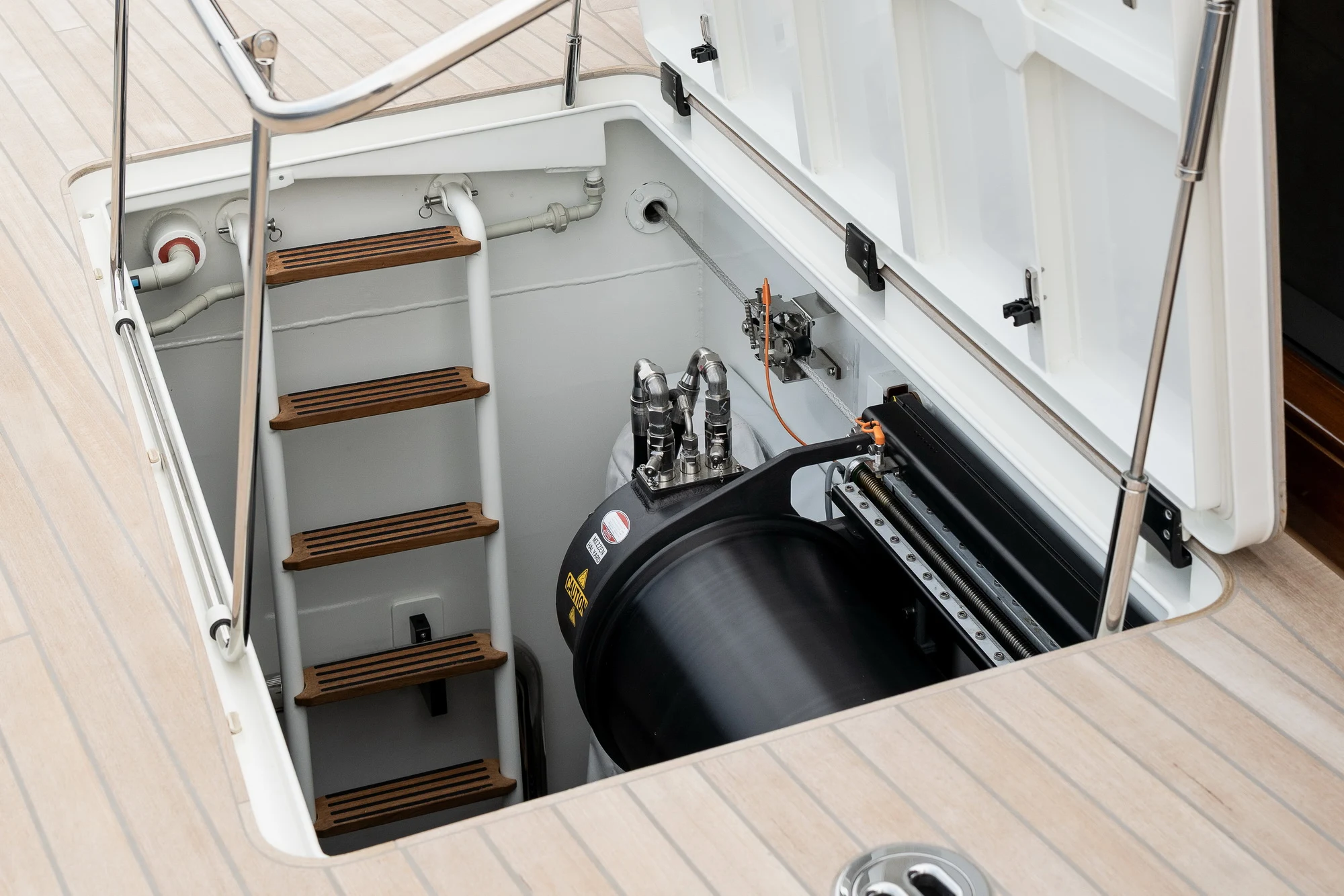
There is nothing particularly simple about a system’s below-deck line routing. As the demand for more interior space pushes winches further from the deck exit, it becomes increasingly difficult to minimize friction and maximize performance.
With decades of experience in underdeck routing, Rondal works alongside architects from the earliest design stage, helping to develop layouts where line paths are optimized to ensure safe, efficient operation.
The same level of optimization applies to every part of the winch system—right down to its controls. “Clients have full flexibility in where controls are placed, and in how they’re programmed,” says Boaz.
Safety, however, is non-negotiable. Two-hand controls come as standard, ensuring operators remain outside high-load zones during operation.
The support doesn’t end once the system is installed. “Our engineers train crew members during sea trials and remain on hand to provide ongoing assistance long after the yacht has been delivered.”
Forty Years in the Making
Today’s captive winches reflect more than thirty years of engineering expertise. They are designed for simplified integration, with self-contained structures and minimal attachment points, while balancing speed (up to 90 meters per minute), weight, and durability.
As with all Rondal winches, they are built with an additional 50% safety margin, which is particularly important in the larger-capacity models.
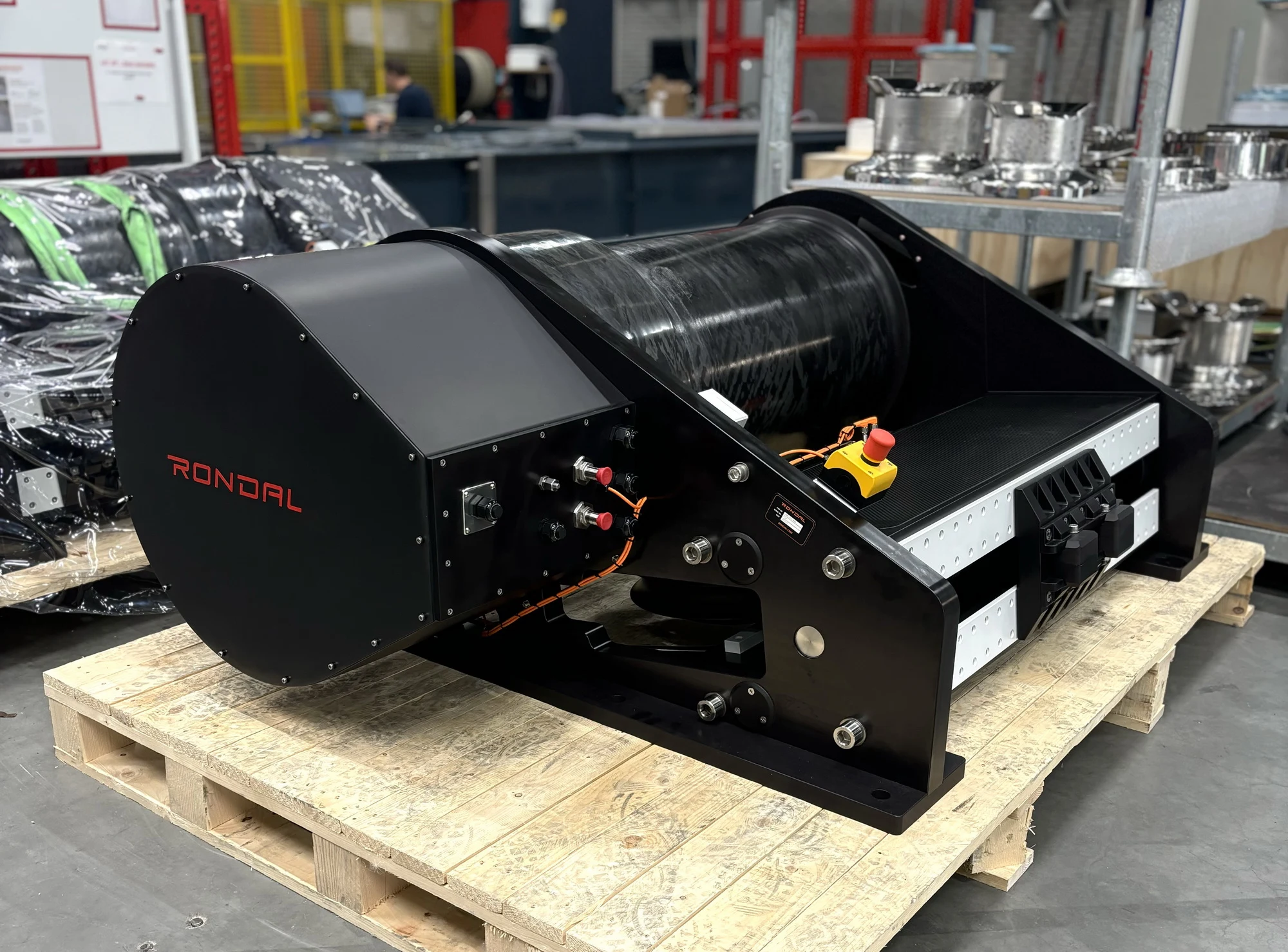
The newest systems are set to debut on a large sailing yacht under construction at a renowned Dutch shipyard with 32-ton-capacity winches.
And the limits are still being pushed. The team has also developed the technology to produce a relatively lightweight captive winch capable of pulling 40 tons. “We are eager to see it installed on a yacht designed to handle this level of power,” enthuses Ard.
The winches can be built in aluminium, full carbon, or in hybrid configurations and, thanks to their modular design, configured for a range of setups—from hydraulic and electric systems to compact solutions or larger drums. They are also available in low, extended versions to accommodate the limited technical space available on certain (sailing) superyachts.
Boundless ambition
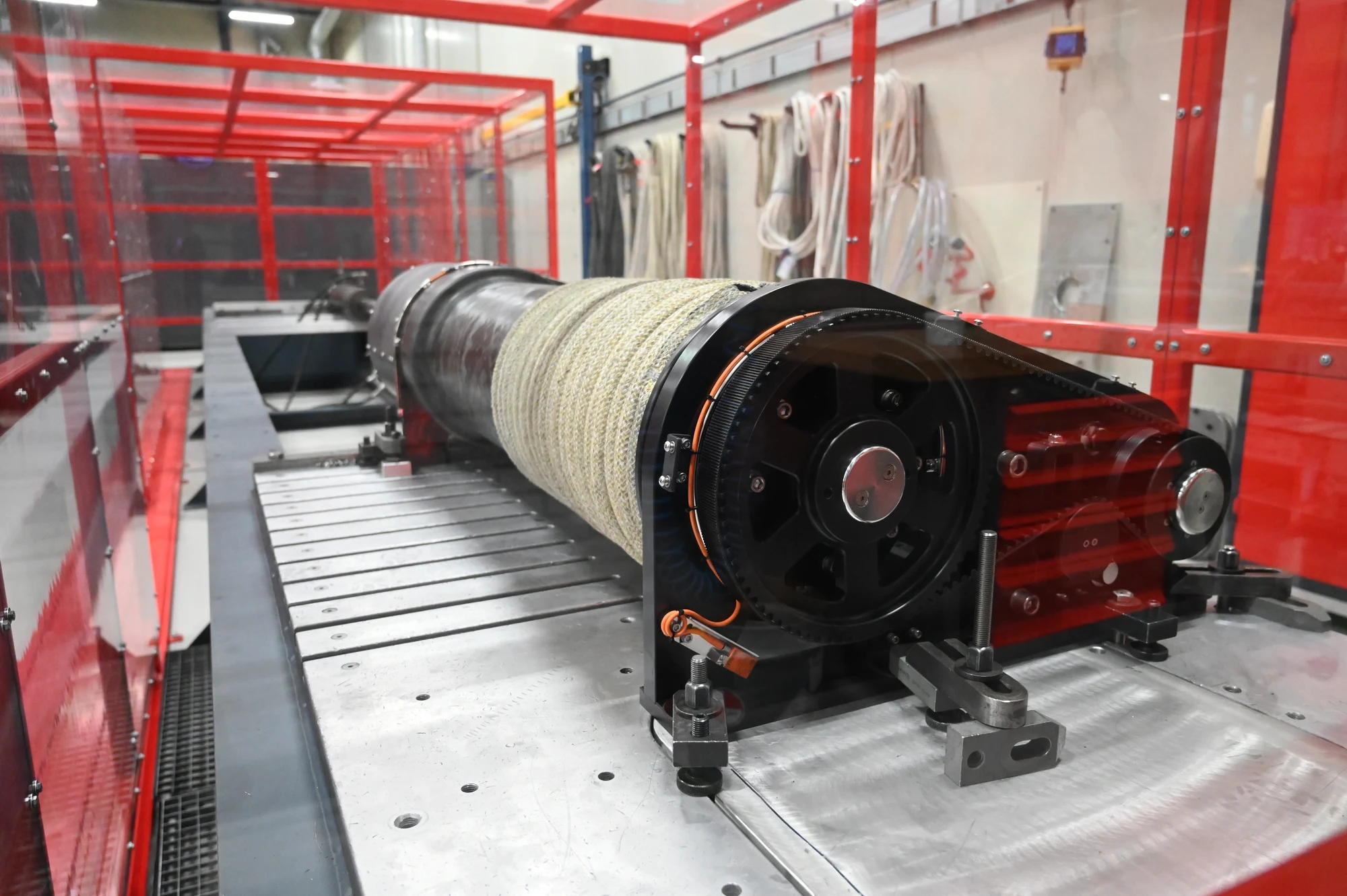
Where this progression ultimately leads is difficult to define. What is clear is that the team have installed a new test bench that can simulate loads of up to 150 tons.
Clearly, Rondal is not in the business of setting limits.
Discover more about Rondal’s Integrated Sailing Systems and Mooring Winches. Or visit us at METSTRADE 2026, Hall 7, Stand 236.


